Local moves in North Carolina range from $754 to $3,277 based on home size and crew requirements, while long-distance relocations within the state cost $1,346 to $5,116 depending on weight and distance. Understanding how movers calculate rates, what's included in base quotes, and which factors drive costs higher helps you budget accurately and avoid surprises on moving day.
How Moving Costs Are Calculated in North Carolina
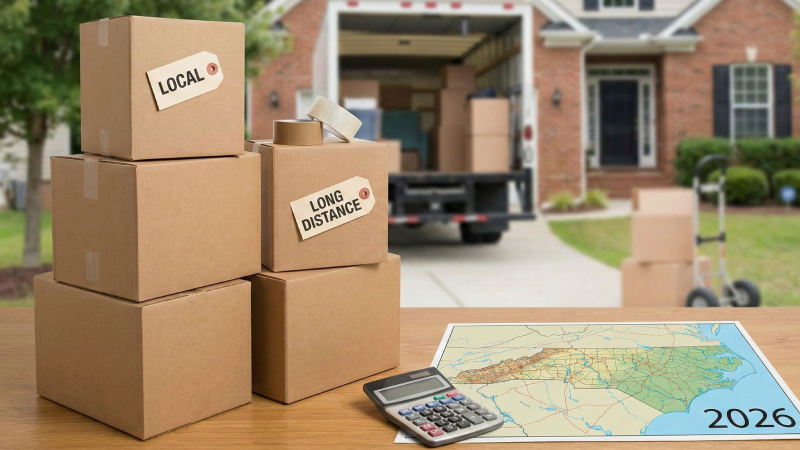
North Carolina's regulatory framework creates two different pricing models that change how your move is billed. The 50-mile threshold acts as a dividing line: stay within that radius, and you'll pay hourly rates, but cross it, and your costs shift to weight-based calculations that can vary based on how much you're hauling. Understanding which pricing model applies to your specific move is the first step in accurate budgeting.
- Local moves under 50 miles: Companies charge hourly rates based on crew size plus mandatory travel time between their facility and your locations.
- Long-distance moves over 50 miles: Pricing switches to weight-based calculations, charging per 100 pounds of belongings plus mileage fees and fuel surcharges.
- Standard inclusions in base quotes: Labor for loading and unloading, the moving truck, basic equipment like dollies and straps, and minimal liability coverage.
- Common add-on services that increase costs: Packing labor (billed at crew's hourly rate), packing materials ($200-$500), storage-in-transit (monthly fees plus handling), and enhanced valuation protection ($1.00-$1.25 per $100 of declared value).
Average Local Moving Costs in North Carolina (2026)
Local moving costs in North Carolina scale with home size. The jump from hourly crew rates to multi-hour commitments creates distinct price tiers that catch many homeowners off guard. While a studio apartment might seem like a quick job, minimum charges and travel time mean you're paying for at least three hours regardless of actual work time. Larger homes require bigger crews working longer shifts to handle the volume of furniture and boxes. Here's how costs break down across common home sizes:
- Studio and 1-bedroom apartments ($754–$942): Two-person crews complete these moves in three to four hours including travel time, though minimum hour requirements often apply even when the actual move takes less time.
- 2-3 bedroom homes ($1,460–$1,946): Three movers working five to seven hours handle the increased furniture volume, with costs rising due to heavier items like bedroom sets and the likelihood of stairs or longer carries from door to truck.
- 4-bedroom houses ($2,681–$3,277): Four-person crews spend eight to ten hours on these family-sized moves, reflecting both the quantity of belongings and the coordination required to load larger homes.
- Labor-only alternatives (averaging $408 statewide): Hiring movers for loading and unloading only while you rent the truck yourself cuts costs, though you'll handle the driving and take on liability for the vehicle.
Charlotte and Raleigh: City-Specific Ranges
Charlotte's booming job market and population growth push moving costs toward the upper end of state averages. High demand during peak season means Charlotte movers book quickly, especially for weekend moves. The city's mix of high-rise apartments and suburban homes creates varied pricing based on access challenges and distance between locations.
Raleigh's competitive moving market often yields better deals than state maximums suggest. The Research Triangle's steady influx of professionals creates consistent demand without the extreme peaks seen in other markets. Many Raleigh movers offer discounts for mid-week or mid-month moves when demand drops. Raleigh's moving companies compete aggressively on price, benefiting budget-conscious customers.
Average Long-Distance (Intrastate) Moving Costs in North Carolina
When your North Carolina move exceeds 50 miles, pricing shifts from hourly to weight-based calculations. The formula combines your shipment's weight with the distance traveled, plus mandatory fuel surcharges.
A 120-mile move with 2,000 pounds of belongings costs about $1,346. This covers a typical one-bedroom apartment moving between major cities like Charlotte and Greensboro. The price includes line-haul charges for weight and mileage, plus a fuel surcharge of $1.18 per mile in 2026.
As distance and weight increase, costs go up significantly. A 170-mile relocation with 6,000 pounds averages $3,450, representing a typical two or three-bedroom home. Moving 200 miles with 10,000 pounds of household goods reaches $5,116, showing why decluttering before your move can reduce costs.
Long-distance quotes include professional loading at the origin, transportation between cities, and unloading at your destination. The fuel surcharge adds a lot to bills. A 200-mile move incurs $236 in fuel charges alone before adding weight-based fees.
Cost Breakdown by Home Size and Move Type
These figures represent base moving costs without add-ons. Actual quotes may fall below maximums in competitive markets. Remember that stairs, long carries, and packing services increase these baseline prices.
- Studio/1-bedroom local move: $754–$942 for moves within 50 miles
- Studio/1-bedroom long-distance (120 miles, 2,000 lbs): ~$1,346
- 2–3 bedroom local move: $1,460–$1,946 for moves within 50 miles
- 2–3 bedroom long-distance (170 miles, 6,000 lbs): ~$3,450
- 4-bedroom local move: $2,681–$3,277 for moves within 50 miles
- 4-bedroom long-distance (200 miles, 10,000 lbs): ~$5,116
Factors That Affect Moving Costs in North Carolina
Distance is the main cost driver, determining whether you pay hourly or by weight. Local moves stay predictable with hourly billing, while long-distance relocations introduce weight variables that can affect pricing. Even 20 extra miles can push you into weight-based territory, potentially doubling costs.
Home size directly affects both time and weight requirements. Larger homes need bigger crews and longer hours locally, or generate heavier shipments for long-distance moves. Apartment movers handle smaller loads efficiently, while four-bedroom homes might require specialized equipment and additional labor.
Timing also affects what you'll pay. Peak season from May through September commands 15 to 20 percent premiums due to higher demand. Weekend moves consistently cost more than weekday relocations, as most people prefer moving when they're off work.
Moving in winter often yields the best rates, though you'll need contingency plans for potential weather delays.
Access challenges at either location can significantly increase costs. Stairs add time to any move (figure one extra hour per flight with your crew). Long carries from your door to the truck extend labor time, while tight parking in downtown Charlotte or Raleigh might require shuttle services, adding hundreds to your bill.
Hidden Costs and How to Avoid Surprises
Packing materials seem minor, but quickly add up. Professional-grade boxes cost $2 to $5 each, and a three-bedroom home needs 60 to 80 boxes. Specialty containers for wardrobes, dishes, and mirrors add another $100 to $200. Learning how to pack efficiently reduces material needs and costs.
Valuation coverage confuses many customers who assume it's included. Basic liability covers only 60 cents per pound (meaning your 50-pound television, worth $800, receives just $30 if damaged). Full Value Protection costs extra but provides actual replacement coverage. Calculate whether the premium makes sense for your belongings' value.
Storage-in-transit charges surprise customers whose closings don't line up. When your new home isn't ready, movers store your belongings, charging both monthly storage fees and additional handling. These costs include loading into storage, monthly fees ranging from $50 to $200, and redelivery charges equaling another full move.
Travel time and minimum hours inflate bills beyond expected hourly rates. Most companies bill one hour of travel time per 50 miles between their facility and your home. Four-hour minimums mean short moves still incur substantial charges. Understanding these policies helps you estimate total costs accurately.
Money-Saving Tips for Moving in North Carolina
Decluttering before moving provides the highest return on effort. Every pound you don't move saves money on long-distance relocations, while selling or donating unused items generates cash or tax deductions. With fewer belongings, moving yourself versus hiring movers becomes more realistic.
Self-packing eliminates packing labor charges that often equal moving costs. Start packing non-essentials weeks before moving day. Make sure to pack books and other heavy items properly to prevent damage and speed up loading.
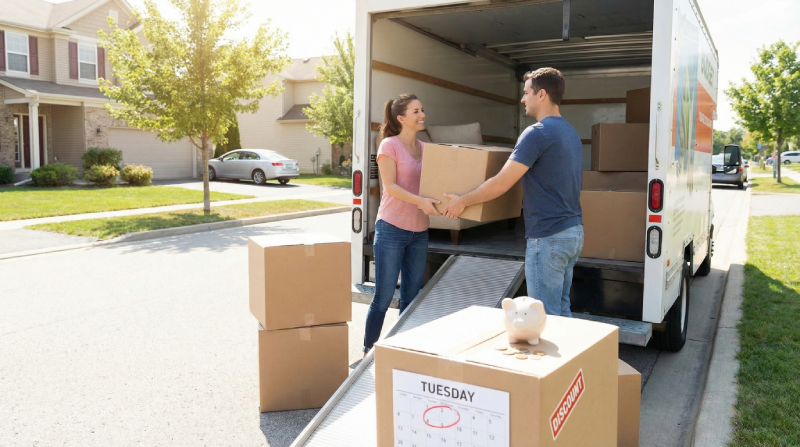
Off-peak scheduling yields significant discounts throughout the year. Moving during October through April takes advantage of lower demand and better rates. Mid-month moves avoid lease turnover rushes, while Tuesday through Thursday relocations command the lowest prices. Some companies offer 20 to 30 percent discounts for customers with flexible schedules.
The hybrid moving approach offers another cost-effective strategy by combining professional labor with DIY transportation. This method involves renting your own truck for $100 to $300 daily, then hiring loading and unloading services separately. By getting professional expertise without full-service prices (typically around $50 per mover hourly), this model cuts traditional moving costs nearly in half.
Budget Your North Carolina Move with Confidence
North Carolina moving costs follow clear patterns: local moves run $754 to $3,277 based on crew size, while long-distance pricing depends on weight and mileage. Your biggest savings come from decluttering, moving off-peak, and self-packing. Compare multiple quotes using these benchmarks as your baseline. Professional loading without full-service costs is available through local moving help services that cut expenses while keeping the heavy lifting in expert hands.
Frequently Asked Questions
What is the average cost of moving in North Carolina for a 2-bedroom apartment?
Local moves for 2-bedroom apartments typically cost $1,460 to $1,946, while long-distance moves within NC range from $2,500 to $3,450, depending on distance and weight.
How much do movers charge per hour in North Carolina?
North Carolina's 2026 maximum rates are $188.40/hour for 2 movers, $243.30 for 3 movers, and $297.90 for 4 movers, though actual rates often fall below these maximums.
When is the cheapest time to move in North Carolina?
October through April offers the lowest rates, with additional savings for mid-week and mid-month moves.
What's included in basic moving quotes?
Standard quotes include labor, truck, basic equipment, and minimal liability coverage. Packing, materials, and full coverage cost extra.
How much does it cost to move from Charlotte to Raleigh?
The 170-mile Charlotte-to-Raleigh move averages $2,500 to $3,450 for a typical 2-3 3-bedroom home.
Do North Carolina movers charge for travel time?
Yes, most companies bill up to one hour of travel time per 50 miles between their facility and your location.
Can I save money by providing my own moving supplies?
Yes, buying your own boxes and materials can save $200 to $500 compared to purchasing from moving companies.





















.webp)