Learning how to pack clothes for moving can make what feels like an overwhelming task much easier. Your wardrobe is a big part of your belongings, and the right approach prevents wrinkles, protects delicate fabrics, and makes unpacking simpler at your new home.
You'll learn practical packing methods for different clothing types, materials that save time and space, realistic timelines for stress-free preparation, and common mistakes to avoid. Whether you're handling one closet or an entire family's wardrobe, these strategies help your clothes arrive organized and ready to wear.
Must-Have Materials for Packing Clothes
Before you start packing, gather the right supplies. Having everything on hand prevents mid-packing trips to the store and keeps your process efficient.
Boxes and Containers
For an adult's full closet, estimate 3-5 medium boxes for folded clothes, 2-3 wardrobe boxes for hanging clothes, and 1-2 boxes for shoes and accessories. Adjust based on your wardrobe size.
- Medium-sized moving boxes: The workhorse for most clothing. Avoid large boxes (they become too heavy when filled with clothes).
- Wardrobe boxes: Tall boxes with built-in hanging bars. Important for dress clothes, suits, and anything you want to be wrinkle-free. Expensive but worth it for professional attire.
- Plastic bins with lids: Great for off-season clothes or items going into storage. Protect against moisture and can be reused indefinitely.
- Suitcases and duffel bags: Don't forget these! They're designed for clothes and shouldn't sit empty during your move. Perfect for heavier items like jeans and sweaters.
Packing Protection
Protecting your clothes during the move requires the right materials between garments and packing surfaces. These supplies prevent damage from moisture, dust, and friction while keeping delicate items wrinkle-free.
- Vacuum-seal bags: Compress bulky items like winter coats and comforters. Can reduce volume by 50-75%. Best for items you won't need right away.
- Garment bags: Protect suits, dresses, and formal wear. Clear ones let you see the contents without opening.
- Plastic wrap or stretch film: Keeps dresser drawers closed, bundles hanging clothes, protects items from dust and moisture.
- Tissue paper or packing paper: Prevents wrinkles in delicate items and provides cushioning between folds.
- Large trash bags: The secret weapon for hanging clothes in a pinch. Heavy-duty bags work best.
Organization Essentials
Keeping your packing organized from the start saves hours during unpacking and helps you find specific items when needed. Use these tools to label clearly, group belongings by person or room, and maintain order throughout the moving process.
- Labels and markers: Clearly mark which room, whose clothes, and general contents. Color-coding by family member saves time unpacking.
- Packing tape: Heavy-duty tape for sealing boxes securely.
- Twist ties or rubber bands: Keep hangers grouped together and secure bundled items.
Step-by-Step Packing Methods by Clothing Type
Different clothes require different packing approaches. Here's how to pack each category for maximum protection and efficiency.
Hanging Clothes (Suits, Dresses, Button-Down Shirts)
Wardrobe boxes transfer clothes directly from your closet to the moving truck with hangers intact, so you don't need to fold or refold anything. This method is fastest for preserving the condition of dress clothes, though the boxes themselves cost more than standard moving boxes.
Best Method: Wardrobe Boxes
Wardrobe boxes have a metal hanging bar across the top. Transfer clothes directly from your closet rod to the box's rod. Clothes stay on hangers and arrive wrinkle-free. Each box holds 1.5-2 feet of closet space (about 10-20 garments).
To pack: Group similar items together (dress shirts, pants). Transfer each section to the wardrobe box on hangers. Fill the bottom with shoes, folded clothes, or accessories. Don't overstuff (clothes should hang without being crushed).
Budget Alternative: The Trash Bag Method
Leave clothes on hangers in groups of 5-10 items. Slide a trash bag up from the bottom over the clothes. Gather the bag opening around the hanger hooks at the top and secure with a twist tie. The hangers poke through the top, and the bag protects clothes from dust.
This method is fast and cheap but offers less protection than wardrobe boxes. Best for casual hanging clothes or short moves.
Premium Option: Garment bags
Individual garment bags provide maximum protection for expensive suits, formal dresses, or delicate fabrics. Zip each item into its own bag. These can be laid flat in boxes, hung in a vehicle, or transported in wardrobe boxes.
Everyday Folded Clothes (T-shirts, Jeans, Casual Wear)
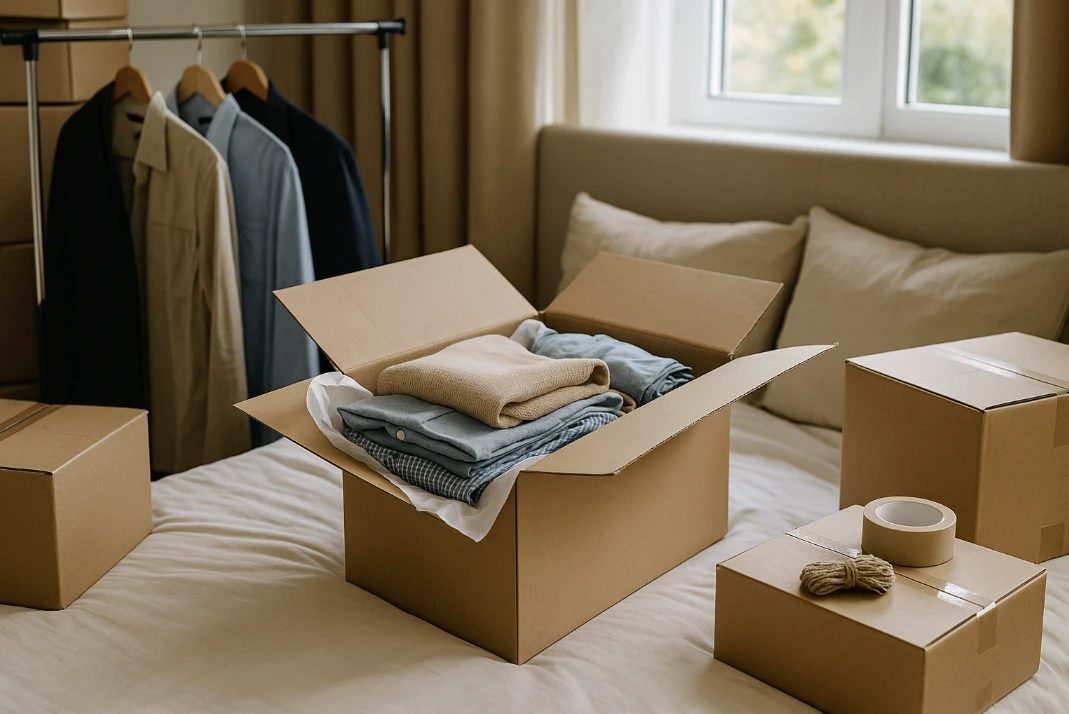
For everyday items like t-shirts, jeans, and casual pants, rolling typically saves the most space and minimizes wrinkles. Structured pieces benefit from traditional folding to maintain their shape.
Best Method: Rolling
Rolling saves space, prevents creases, and lets you see all items at once. Lay the garment flat, fold in the sleeves, or fold lengthwise, then roll tightly from bottom to top. For t-shirts, fold the bottom up a few inches first, then roll and tuck it into the folded bottom to create a bundle that won't unroll.
Pack rolled clothes vertically in boxes like files in a filing cabinet. This prevents crushing and makes items visible without digging. Fill gaps with socks, underwear, or accessories.
When to Fold Instead of Roll
Fold dress shirts with stiff collars, structured garments that lose shape when rolled, and heavy sweaters that create bulky rolls. Stack folded items flat with the heaviest on the bottom. Place tissue paper between folds of delicate items to prevent sharp creases.
Delicate and Special Items (Silk, Cashmere, Formal Wear)
Delicate fabrics like silk, cashmere, lace, and formal wear require extra care to prevent damage during a move. These items can snag, crush, or crease permanently, so they need individual attention and protective materials rather than being tossed into boxes with everyday clothes.
- For hanging delicate items: Use individual garment bags or wardrobe boxes. Never pack delicate hanging clothes in trash bags or regular boxes where they'll be compressed.
- For delicate folded items: Line a box with clean tissue paper or packing paper. Fold each garment with tissue paper between folds to cushion creases. Don't stack too many items (weight causes wrinkles). Mark the box "FRAGILE" and "UNPACK FIRST."
- For items with embellishments: Wrap beaded, sequined, or embroidered items individually in tissue paper before packing to prevent snagging. Consider wrapping straps or delicate parts with tissue to protect them from breakage.
Pro tip: Photograph expensive or delicate items before packing. This documentation is helpful for insurance claims if anything is damaged during the move.
Bulky Items (Winter Coats, Comforters, Blankets)
Bulky winter items like coats, comforters, and blankets take up significant space but are lightweight. The challenge is to use space efficiently while keeping items clean and wrinkle-free.
Best Method: Vacuum-seal bags
Vacuum-seal bags compress bulky items to a fraction of their size, potentially saving an entire box or more. This is especially valuable for long-distance moves where you're paying based on truck space.
How to use them: Place clean, dry items in the bag without overstuffing. Seal according to manufacturer instructions. Use a vacuum cleaner to remove air through the valve. The bag compresses dramatically, creating dense, flat packages that stack efficiently.
Important caveats: Clothes emerge very wrinkled. Only use vacuum bags for out-of-season items you won't need right away. Don't keep down jackets compressed for months (this can permanently damage their loft). Vacuum-sealed bags are heavy (a bag of winter coats can weigh 30+ pounds). Don't stack heavy items on top during transport.
Alternatives for Items You'll Need Soon
Pack bulky items loosely in large boxes or plastic bins. You'll use more space but avoid deep wrinkles. Roll heavy sweaters instead of folding to reduce wrinkle risk.
Shoes and Accessories
Shoes and accessories need organized packing to prevent damage and keep pairs together.
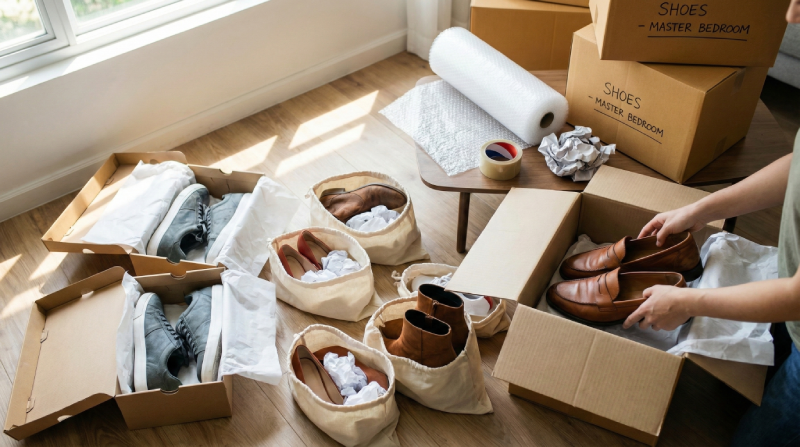
- Shoes: Stuff each shoe with socks to maintain shape. Wrap pairs in packing paper or shoe bags. Pack sole-to-sole in medium boxes. Heels and dress shoes need individual wrapping or their original boxes. Place shoes in the bottom of wardrobe boxes to maximize space.
- Belts: Roll individually or bundle with rubber bands. Pack in small boxes or use to fill gaps.
- Scarves: Roll or fold loosely. Pack together or use to fill gaps around other items.
- Bags and purses: Stuff with packing paper or soft clothes to maintain shape. Pack structured bags carefully to prevent crushing. Place valuable bags in individual boxes.
- Jewelry: Pack separately in a small box with your valuables. Use jewelry organizers, egg cartons, or small plastic bags to prevent tangling. Transport expensive jewelry yourself.
Underwear and Socks
These are the easiest items to pack. Simply place them in a box, suitcase, or use them to fill gaps in other boxes. Roll socks into balls or keep them paired. Use underwear and socks as cushioning around shoes or to fill empty spaces in boxes (they're perfect packing material that doesn't go to waste).
Smart Packing Strategies and Space-Saving Techniques
Beyond choosing the right boxes and bags, how you organize and execute your packing makes the difference between a chaotic move and a smooth transition. These strategies help you maximize space, maintain organization, and help your clothes arrive in the best possible condition.
Bundle Wrapping for Dress Clothes
Layer dress shirts and pants in a stack with crumpled packing paper in the center. Fold one side of the bottom item over the core, then the opposite side. Continue wrapping each layer, alternating sides. Pack bundles flat in boxes (garments cushion each other and stay relatively wrinkle-free).
The Dresser Drawer Method
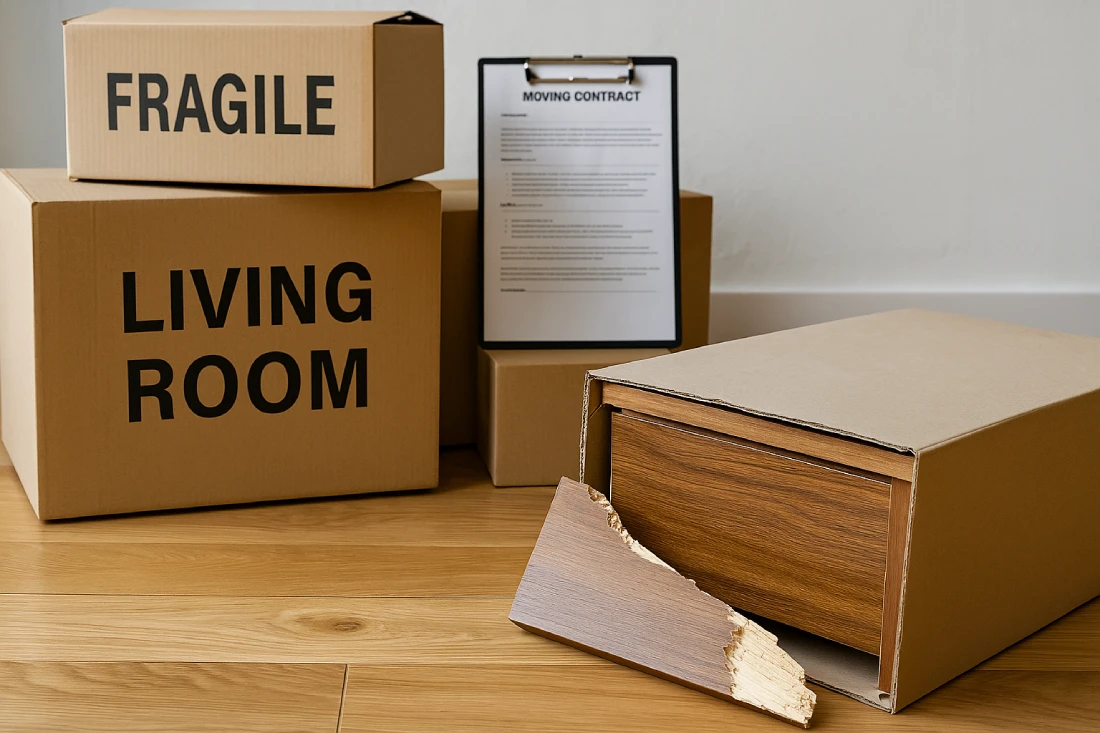
Remove drawers from the dresser and wrap each in plastic wrap to secure contents. Treat wrapped drawers like boxes during loading. Moving the dresser frame separately works best for solid wood dressers (avoid with particle board). Remove fragile items and valuables, and confirm your moving company allows this method.
Use Luggage Wisely
Fill suitcases and duffel bags with clothes, especially heavier items like jeans, sweaters, and shoes. Use luggage for items you'll need first. Roll your suitcase into your new bedroom and unpack the basics right away.
Pack an Essentials Bag
Set aside 3-5 days' worth of clothing in a separate bag. Include complete outfits, toiletries, pajamas, and work clothes. Keep this bag with you during the move (never load it on the truck).
Vacuum-Sealed Bags for Space Savings
Vacuum bags reduce volume by 50-75%. Use them strategically for bulky, out-of-season items only. Don't seal items you'll need within the first week (wrinkles make them unwearable without laundering or steaming).
Color-Code by Person or Room
Assign each person a colored label or marker. This lets movers place boxes in the right bedroom without reading detailed labels. You can also color-code by priority: red for "unpack first," yellow for "unpack this week," green for "unpack eventually."
Use Box Space Efficiently
Fill boxes to capacity without exceeding 30-40 pounds. Use smaller items (socks, underwear, accessories) to fill gaps. Place heavier items at the bottom, lighter items on top. Don't mix clothes with heavy non-clothing items that could damage fabrics.
Timeline: When to Start Packing Clothes
Timing is everything when packing for a move. Starting early with items you won't need and gradually narrowing down to the basics prevents last-minute chaos and ensures you have what you need throughout the transition.
4-6 Weeks Before
Pack out-of-season clothing, formal wear, and special occasion outfits. This is the ideal time to start since these items won't be needed during your transition period and can be safely stored away without affecting your daily routine.
3-4 Weeks Before
Pack rarely used clothes and off-season shoes. At this stage, you should still have plenty of wardrobe options while gradually reducing what's accessible in your closets and drawers.
2-3 Weeks Before
Pack infrequently worn items. Focus on maintaining a functional wardrobe that covers all your typical activities while continuing to reduce the volume of unpacked clothing.
One Week Before
Create a one-week capsule wardrobe of versatile basics. This streamlined selection should include mix-and-match pieces that work for various occasions, minimizing what you need while maximizing outfit options.
2-3 Days Before
Pack all remaining items except your essentials bag (3-5 days of clothing). By this point, you're in the final countdown and should have only the bare minimum of clothing still accessible to avoid last-minute chaos.
Moving Day
Keep only what you're wearing and your essentials bag, which travels with you in your personal vehicle. This gives you immediate access to fresh clothes without needing to unpack boxes right away in your new home.
Pro tip: If you're moving locally and have flexible timing, consider transporting clothes yourself in your personal vehicle over several trips before moving day. This reduces what the movers need to handle and gives you more control over your wardrobe's safety.
Common Mistakes to Avoid When Packing Clothes
Even experienced movers make predictable mistakes when packing clothes. These errors lead to damaged items, disorganized unpacking, or unnecessary stress. Learning what to avoid is just as important as knowing the right techniques.
- Overpacking Boxes Until They're Too Heavy: Clothes may seem light individually, but they add up quickly in boxes. A large box filled with clothes can easily reach 60-70 pounds, making it unsafe to lift and risking box breakage during transport. Keep boxes at 30-40 pounds maximum by using medium-sized boxes and testing the weight before sealing.
- Not Decluttering Before Packing: Moving is a good time to get rid of clothes you no longer wear. Packing items you'll eventually donate wastes time, space, and money. Sort everything into keep, donate, and discard piles before packing. If you haven't worn something in a year (excluding seasonal or special occasion items), let it go.
- Mixing Clean and Dirty Clothes: Only pack clean clothes to prevent staining, odors, and pest attraction during transport. Complete a final laundry cycle the week before moving. If you must pack items requiring dry cleaning, pack them separately and label the box clearly.
- Forgetting to Pack an Essentials Bag: Pack 3-5 days' worth of complete outfits separately in a bag that stays with you during the move. Include underwear, socks, pajamas, work clothes, toiletries, medications, and phone chargers. This prevents searching through dozens of boxes for basic necessities on your first day.
- Using Boxes That Are Too Large: Large boxes become unmanageable when filled with clothes and increase shifting damage risk. Use medium boxes (approximately 18x18x16 inches) for clothing. Reserve large boxes only for lightweight, bulky items like bedding, pillows, or uncompressed coats.
- Not Labeling Boxes Clearly: Generic labels like "clothes" provide no useful information during unpacking. Label specifically with details like "Dad's work shirts" or "Kids' winter clothes," including the destination room. Write on multiple sides of each box so labels remain visible when stacked. This saves hours during unpacking and helps movers place boxes correctly.
- Packing Valuable Items in the Moving Truck: Designer clothing, jewelry, expensive accessories, and sentimental items should travel with you in your personal vehicle. Never load irreplaceable or high-value items in the moving truck. The risk of damage, loss, or theft isn't worth taking with items you can't replace.
- Leaving Clothes on Hangers but Not Securing Them: Unsecured hanging clothes will fall off hangers, get dirty, and wrinkle during transport. Use proper wardrobe boxes with hanging bars or bundle hanging clothes in secured trash bags. Never hang clothes loosely in a vehicle; they'll end up in a pile on the floor.
- Waiting Until the Last Minute: Clothes are among the easiest items to pack early, yet people often delay. You can pack out-of-season clothes a full month before moving without affecting daily life. Starting early allows thoughtful packing, proper decluttering, and appropriate methods. Last-minute packing creates stress and results in wrinkled, poorly organized items.
Pack Clothes Like a Pro
Packing clothes for a move is simple when you follow a clear plan: start early with out-of-season items, declutter ruthlessly, use the right method for each clothing type (leave hanging items on hangers, roll casual wear, protect delicates), and label everything clearly. Always pack an essentials bag with 3-5 days of clothing to avoid frantic searching on day one. The goal is simple: get your wardrobe to your new home in good condition with minimal stress, learning smart packing strategies that work best for your situation and timeline.
FAQs
How many wardrobe boxes do I need?
Each wardrobe box holds about 1.5-2 feet of closet rod space (10-20 garments). Measure your hanging clothes to estimate.
How do I prevent moths during a move?
Pack only clean clothes, use cedar blocks or lavender sachets in boxes with wool items, and unpack promptly rather than leaving clothes in sealed boxes for months.
What should I do with the clothes I want to donate?
Sort donations during your 4-6 week packing window. Drop them at donation centers before moving day so they don't get confused with items you're keeping.
Can movers carry wardrobe boxes?
Yes, that's their purpose. Wardrobe boxes have handles and are designed to be carried by professional movers.
How do I pack clothes for long-term storage?
Use plastic bins instead of cardboard (prevents moisture and pests), pack only clean clothes, add cedar or lavender for moth prevention, and store in climate-controlled units if possible.







.webp)