Storing a pod on your property legally means following local rules, permit requirements, and neighborhood restrictions that change based on where you live. This article covers permit requirements, placement rules, time limits, and HOA restrictions. You'll learn what documents you need, where you can place your container, how long you can keep it, and how to avoid fines, forced removal, and neighbor disputes during your move or renovation.
Understanding Local Regulations for Portable Storage Units
Local rules for portable storage containers vary widely depending on where you live. Some cities treat temporary pods used for moving or renovation as "temporary accessory structures" that need minimal oversight. Others apply the same strict permitting processes used for permanent construction projects. This difference matters because it determines whether you'll need formal permits, how long you can keep the container on-site, and what penalties you face for breaking the rules. Here's how local governments typically regulate portable storage placement:
- Temporary vs. permanent classification: Most cities classify pods as temporary structures when used for moves or short-term storage (typically under 30-90 days), which means less strict permit requirements than permanent installations.
- Private property vs. public right-of-way rules: Containers placed on your driveway or yard face fewer restrictions than those positioned on streets or sidewalks, though both situations still require following setback requirements and zoning rules.
- Zoning code provisions: Your property's zoning type (residential, commercial, or mixed-use) determines which specific rules apply, including where you can place containers, maximum time limits, and required distances from property lines.
- Use-based distinctions: Local codes often treat containers differently based on whether you're using them for moving, construction equipment storage, or long-term personal storage. Each category has different permit processes and time restrictions.
Permit Requirements for Driveway Storage Pods
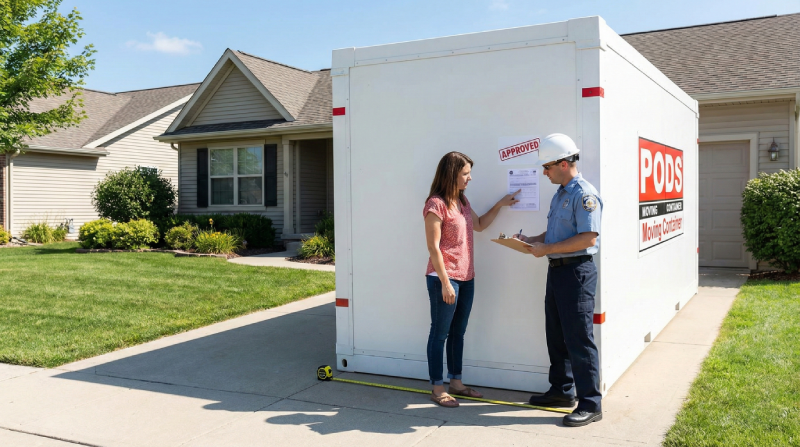
Permit requirements for portable storage containers depend heavily on whether you're placing the unit in public space or on private property. Each situation has different rules and documentation needs. Public right-of-way placement (like positioning a pod on the street in front of your home) almost always requires permits because the container affects traffic patterns, emergency vehicle access, and neighborhood appearance. Private property placement operates under a mix of local rules that range from no oversight to strict permitting based on container size and storage time. Here's what you need to know about permit requirements for different placement situations:
- Street placement permit requirements: Containers placed on public streets or sidewalks require formal permits in nearly all cities, typically involving application fees ranging from $20 to $100, proof of liability insurance, and documents specifying the container's dimensions and how long you plan to store it.
- Private property permit variations: Driveway and yard placement rules vary significantly by city. San Francisco requires permits for containers staying longer than 72 hours on private property, while many other cities allow 30 days or more without formal approval.
- Application documentation: The permit process typically requires submitting a site plan showing where you'll place the container, proof of property ownership or a rental agreement, container dimensions and storage purpose, and payment of applicable fees.
- Additional requirements for public placement: Street-placed containers often require proof of liability insurance coverage and neighbor notification before permit approval, making the approval process more complex than private property placement.
Placement Rules and Space Requirements for Container Self Storage
Container placement must account for safety, accessibility, and neighborhood impact while following local setback requirements. Most cities prohibit blocking sidewalks, fire hydrants, utility access points, or emergency vehicle routes. Your portable self-storage unit needs adequate clearance from property lines, typically ranging from 3 to 10 feet, depending on local codes.
Delivery trucks need specific space dimensions to safely place and retrieve containers, requiring at least 12 feet of width, 15 feet of vertical clearance, and 40 feet of straight approach. Consider overhead obstacles like power lines, tree branches, and building overhangs that might interfere with crane operation during delivery. Ground conditions matter too, as containers need level, stable surfaces capable of supporting several thousand pounds. Understanding proper loading techniques and loading space optimization strategies can help you maximize your container's capacity while maintaining safe weight distribution.
Prohibited placement locations typically include:
- Front yard setbacks in many residential zones
- Landscaped areas protected by environmental regulations
- Blocking mailboxes or utility meters
- Within sight triangles at intersections
Duration Limits for Temporary Storage Units
Time restrictions for portable storage vary dramatically between cities. Some cities allow just 72 hours, while others permit several months. Baltimore limits pod storage to 72 hours on residential property, while Fairfax County, Virginia, allows 7 to 60 days depending on lot size and housing type. These variations make checking your specific local rules important before scheduling delivery.
Extensions beyond initial time limits often require additional permits or variance requests, particularly for renovation projects or insurance claims. Special circumstances like fire damage, flood recovery, or major construction may qualify for extended storage permissions. Document these situations thoroughly when requesting extensions, as code enforcement typically requires proof of ongoing need. If you're working within tight timeframes, consider realistic moving timeline expectations and planning strategies to complete your move within permitted time periods.
Exceeding time limits triggers enforcement action ranging from warning notices to daily fines and forced removal at the owner's expense. Some cities impose escalating penalties, starting at $50 per day and increasing to $500 daily for continued violations.
HOA and Neighborhood Restrictions for Backyard Shipping Container Sheds
Homeowners’ associations often impose stricter rules than city codes, focusing on appearance standards and property values. Many HOAs prohibit portable storage containers entirely, while others allow them with specific restrictions on size, placement, and appearance. Get written approval from your HOA board before any container delivery to avoid violation notices and fines.
Common HOA restrictions include limiting containers to rear yards only, requiring screening from street view, and requiring specific colors or coverings. Time limits in HOA-governed communities often range from 7 to 30 days, with some associations requiring removal within 48 hours of loading or unloading completion. Review your CC&Rs (Covenants, Conditions, and Restrictions) carefully, as these documents outline specific storage limitations.
Navigating neighbor concerns requires proactive communication about your storage plans, timeline, and efforts to minimize disruption. Notify adjacent property owners before the container arrives, especially if delivery might temporarily block driveways or create noise. Consider offering your contact information and being flexible about placement if neighbors express reasonable concerns about views or access.
Street vs. Driveway Placement Legal Distinctions
Street placement of portable storage units creates additional legal complexities beyond simple driveway storage. Public right-of-way use typically requires specific permits, proof of liability insurance, and following traffic safety regulations. Cities may require reflective markings, lighting, or barriers around street-placed containers to prevent accidents.
Insurance requirements for street placement often exceed standard homeowner's coverage, potentially requiring additional liability protection or bonding. Some cities require minimum coverage amounts ranging from $300,000 to $1 million for containers placed in public spaces. Verify your insurance covers both property damage and personal injury claims related to the container's presence.
Driveway placement on private property simplifies many legal requirements, but doesn't eliminate them entirely. While you avoid traffic safety regulations and additional insurance requirements, you still face zoning restrictions, HOA rules, and potential neighbor disputes. Property line setbacks and utility easements may limit where you can position a container, even on your own residential property, requiring careful measurement and planning.
Cost Considerations for Legal Pod Storage
The true cost of legal pod storage goes far beyond the initial permit fee. The financial gap between following rules and breaking them creates a clear reason to follow local regulations from the start. While permit fees represent a modest upfront investment, violation penalties and forced removal expenses can quickly multiply into significant financial burdens that dwarf the cost of proper authorization. Here's what you need to budget for when storing a pod legally on your property:
- Standard permit costs: Residential permits typically range from $20 to $100 for private property placement, while street placement permits often cost more due to additional administrative requirements and public space impact. Some cities also charge daily rates for extended street use that can reach several hundred dollars over time.
- Violation penalty structure: Non-compliance fines start at $100 to $250 for initial violations and accumulate daily until you achieve compliance, with forced removal costs potentially reaching thousands of dollars when cities tow containers still containing your belongings.
- Complete budget considerations: Factor in permit fees, potential HOA fines, insurance adjustments, and contingency funds for unexpected delays requiring permit extensions. Understanding moving cost factors and budget planning helps you allocate funds appropriately for permits and potential contingencies.
- Time-saving professional services: Professional loading and unloading services can help you complete work within tight permit timeframes, potentially saving money on extension fees while providing efficient container packing that maximizes your allowed storage time.
Risk Management and Enforcement Actions
Code enforcement typically begins with written warnings providing specific timeframes for compliance before escalating to fines. Response times vary from 24 hours for serious safety violations to 10 days for minor infractions. Understanding enforcement procedures helps you respond appropriately and avoid unnecessary penalties through prompt action.
Violation notices require immediate attention to prevent escalation, even if you believe the citation was issued in error. Document your compliance efforts with photographs, permits, and correspondence with officials. Request clarification if requirements seem unclear, as enforcement officers often prefer voluntary compliance over punitive action.
Resolving disputes may involve variance requests, appeals processes, or mediation with neighbors and HOA boards. Prepare documentation supporting your storage needs, including moving contracts, renovation permits, or insurance claims. Consider hiring professionals familiar with local moving regulations who can advise on compliance strategies and help navigate bureaucratic processes.
Protecting Your Property Rights During Pod Storage
Successfully storing a pod legally requires balancing your property rights with community standards and safety requirements. Check local ordinances before scheduling delivery, obtain necessary permits in advance, and maintain open communication with neighbors and officials throughout the storage period. This proactive approach prevents most compliance issues.
Proper planning includes measuring your space, confirming delivery routes, verifying insurance coverage, and establishing contingency plans for weather delays or permit extensions. Understanding pod storage dimensions helps you confirm your chosen location accommodates both the container and required clearances. Standard sizes range from 7x7 feet for mini storage units to 16x8 feet for larger moving containers, each requiring different space allocations. If you're facing unexpected timeline changes, emergency moving assistance and rapid coordination services can help you maintain compliance with permit deadlines.
Taking Action on Legal Pod Storage
The difference between a smooth pod storage experience and a compliance nightmare comes down to three actions: verify your zoning requirements and HOA rules before delivery, secure permits at least one week in advance, and position containers with precise measurements from property lines and utilities. Most violations stem from assumptions rather than ignorance. Don't assume your driveway placement is automatically legal or that "just a few days" won't trigger enforcement when you're ready to coordinate delivery logistics and loading schedules that align with your permit timeframes. Finally, DIY movers that are short on time should consider hiring professional loading services for efficient container packing within allowed limits.
Frequently Asked Questions
Do I need insurance beyond my homeowner's policy for pod storage?
Street placement typically requires additional liability coverage, while driveway storage usually falls under existing homeowner's insurance.
Can my HOA prohibit pods if the city allows them?
Yes, HOAs can impose stricter rules than city codes, including a complete prohibition of storage containers.
What happens if I need to keep my pod longer than permitted?
Apply for an extension before the initial permit expires, providing documentation of your continued need.
Are there size restrictions for portable storage containers?
Most residential zones limit containers to standard moving pod dimensions, typically not exceeding 16 feet in length.
Can I store a pod on unpaved surfaces like grass?
Most cities require hard, level surfaces to prevent ground damage and provide safe delivery and pickup.
Do I need permits for multiple containers?
Yes, multiple containers often trigger commercial storage regulations requiring different permits and fees.
What if my neighbor complains about my legally permitted pod?
Maintain your permit documentation and try resolving concerns directly, but legal placement typically prevails.





































.webp)