
The best school districts in NC combine strong academics, experienced teachers, and supportive communities that help students thrive. This guide covers North Carolina's top-performing districts for 2026, explains how rankings work, and provides a practical framework for evaluating schools based on your family's priorities.
Top 10 Best School Districts in North Carolina 2026
North Carolina's top school districts for 2026 include urban, suburban, and smaller communities that consistently deliver strong academic outcomes. These rankings combine data from multiple sources, including state report cards, standardized test scores, graduation rates, and parent reviews to identify districts that excel across multiple areas:
- 1. Chapel Hill-Carrboro City Schools (Chapel Hill/Carrboro) - Highest graduation rates and college readiness scores in NC.
- 2. Union County Public Schools (Monroe/Waxhaw area) - Strong growth metrics with expanding advanced placement programs.
- 3. Wake County Schools (Raleigh/Cary/Apex) - Largest district with extensive magnet and year-round options.
- 4. Polk County Schools (Columbus/Tryon) - Small district with exceptional per-student resources.
- 5. Mooresville Graded School District (Mooresville/Lake Norman) - Digital learning leader with 1:1 device programs.
- 6. Watauga County Schools (Boone/Blowing Rock) - Mountain district with strong STEM and outdoor education.
- 7. Asheville City Schools (Asheville) - Arts integration focus with diverse program offerings.
- 8. Newton-Conover City Schools (Newton/Conover) - High achievement despite smaller budget through efficiency.
- 9. Cabarrus County Schools (Concord/Kannapolis) - Growing district with new schools and modern facilities.
- 10. Elkin City Schools (Elkin) - Small district with personalized attention and community support.
Last updated: February 2026
District Snapshots of Top NC School Systems
Understanding what makes each of the best public schools in North Carolina unique helps families match districts to their specific needs. These snapshots highlight the features, strengths, and considerations for each top-performing district.
Chapel Hill-Carrboro City Schools
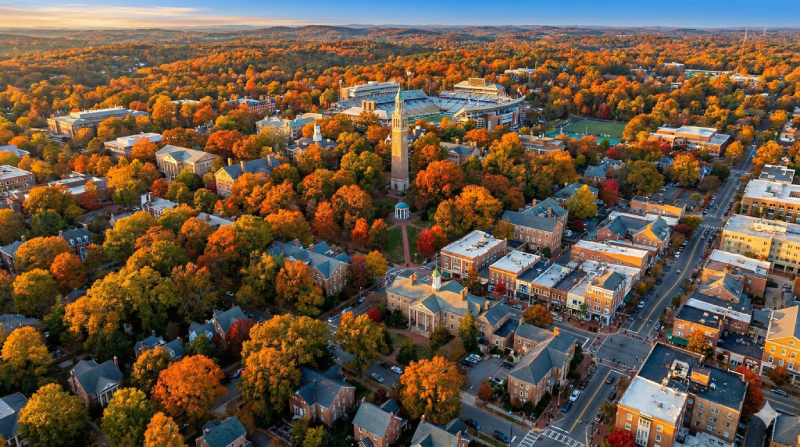
This district serves approximately 12,000 students across Chapel Hill and Carrboro, benefiting from proximity to UNC-Chapel Hill and the Research Triangle. The district boasts a 95% graduation rate and leads the state in National Merit Scholars per capita. Families appreciate the diverse curriculum offerings including Chinese immersion programs, extensive AP courses, and strong arts programs. Housing costs in this area rank among North Carolina's highest, and school assignment zones change periodically to manage enrollment.
Union County Public Schools
Serving over 42,000 students in rapidly growing Charlotte suburbs, Union County combines suburban expansion with academic excellence. The district added five new schools in the past three years to accommodate growth while maintaining high standards. Their career and technical education programs partner with local businesses, providing students practical skills alongside college preparation. Families should verify specific school assignments as quality varies more between individual schools than in smaller districts.
Wake County Schools
North Carolina's largest district educates over 160,000 students across Raleigh, Cary, Apex, and surrounding communities. Wake offers more school choice than any other NC district, with 40+ magnet programs, year-round calendar options, and early college high schools. The district's size provides resources for specialized programs serving gifted students, special education needs, and career pathways. Navigation complexity increases with size, so families need to research individual school performance within this massive system.
How Rankings Determine the Best School Districts in NC
Major ranking organizations evaluate North Carolina schools using different methods, which explains why you'll see variation between lists. Understanding these differences helps you interpret rankings appropriately for your family's situation.
Most ranking systems focus heavily on academic performance, typically weighting it at 40-60% of the total score. The remaining factors combine to create a more complete picture of district quality:
- Academic performance metrics include standardized test proficiency rates, SAT/ACT scores, and Advanced Placement participation and pass rates.
- Graduation rates account for 15-25% of rankings, measuring both on-time graduation and college enrollment rates.
- Teacher quality metrics contribute 10-20% to most formulas, including experience levels, advanced degrees, and student-teacher ratios.
- Community input through parent and student surveys adds qualitative context to quantitative data.
- Equity measures like achievement gaps between demographic groups and support for economically disadvantaged students.
- Extracurricular offerings typically represent less than 10% of the overall score.
Year-to-year changes in testing requirements and data availability mean rankings fluctuate. Reviewing multiple years provides better perspective than relying on single-year snapshots.
North Carolina School Report Cards and Official Grading System
The North Carolina Department of Public Instruction issues official report cards that differ from third-party rankings but provide valuable standardized comparisons. Understanding this system helps families interpret the state's perspective on district performance.
North Carolina calculates district grades using a 15-point scale. The formula weights achievement at 80% and academic growth at 20%, meaning current performance matters more than improvement:
- Scores 85-100 earn an A grade.
- Scores 70-84 earn a B grade.
- Scores 55-69 earn a C grade.
- Scores 40-54 earn a D grade.
- Scores below 40 earn an F grade.
This calculation method can disadvantage districts serving more economically challenged populations even when they show strong growth.
Report cards include additional context beyond letter grades. Schools receive separate scores for reading, math, and science proficiency, allowing families to identify subject-specific strengths. The state also tracks several important indicators:
- Chronic absenteeism rates.
- Suspension rates and disciplinary patterns.
- School safety indicators that affect learning environments.
- Career and college readiness metrics including work-based learning, industry credentials, and college course completion.
Best School Districts in North Carolina by Region
Geographic considerations often narrow school district choices before rankings enter the picture. Understanding regional standouts helps families focus their research based on employment centers and lifestyle preferences.
Triangle Area Districts
The Triangle's best school districts cluster around Research Triangle Park's knowledge economy. Chapel Hill-Carrboro consistently tops rankings, while Wake County offers the most variety through its size. Orange County Schools, though less frequently ranked at the top, provides strong programs in rural areas outside Chapel Hill. Durham Public Schools shows significant improvement in recent years, particularly in magnet programs, though overall rankings remain middle-tier.
Charlotte Metro Districts
Charlotte's surrounding counties dominate rankings for the region. Union County leads suburban districts, while Cabarrus County balances growth with quality. Charlotte-Mecklenburg Schools, the state's second-largest district, offers excellent magnet programs though overall performance varies widely by school. Mooresville Graded School District in the Lake Norman area pioneered digital learning initiatives that became models statewide. For a comprehensive look at the area's neighborhoods and school zones, explore the best places to live in Charlotte, which covers how school districts influence housing choices across the metro.
Mountain Districts
Western North Carolina's smaller districts often outperform their size. Watauga County around Boone combines university town resources with outdoor education opportunities. Polk County achieves high rankings despite its small size through efficient resource use. Asheville City Schools brings urban amenities and arts focus to the mountains. Henderson County Schools serves Hendersonville with solid performance across traditional metrics. Families considering mountain living should understand how Asheville's school districts compare to other NC options before making relocation decisions.
Choosing the Right North Carolina School District for Your Family
Rankings provide starting points, but the best school district for your family depends on matching specific needs with district strengths. A systematic evaluation approach helps you focus on what truly matters rather than getting overwhelmed by options.
Start by identifying your family's priorities. Consider which factors are non-negotiable versus nice-to-have features:
- Academic rigor and college preparation programs for students pursuing higher education.
- Special education services and support for children with learning differences.
- Commute times and proximity to work that affect daily family routines.
- Before and after-school care programs that accommodate working parents.
- Bus transportation availability to your potential neighborhoods.
- Diversity and inclusion initiatives that reflect your family values.
- Specialized programs like language immersion, STEM academies, or arts integration.
Visit schools during regular session days rather than scheduled tours to observe authentic learning environments. This unfiltered view reveals classroom dynamics, student engagement, and the real culture of the school.
Ask targeted questions that reveal important details beyond test scores:
- Teacher turnover rates, which indicate workplace satisfaction and program stability.
- Discipline policies and how schools handle bullying and behavioral issues.
- Student support systems for academic and emotional challenges.
- Technology integration, from device programs to computer science curriculum.
- Extracurricular offerings that match your child's interests and talents.
Finding Your North Carolina School District and Planning Your Move
Once you've identified target districts, practical relocation planning begins. School district boundaries rarely align with city limits, and large districts like Wake County subdivide into multiple assignment zones.
Use official district websites to verify which schools serve specific addresses, as real estate listings sometimes contain outdated information. Explore whether districts offer school choice options like magnet programs or transfers that might expand your housing search area. For families comparing Triangle suburbs, reviewing cities close to Raleigh provides detailed school quality comparisons across Wake County communities. Similarly, those considering the Charlotte metro should examine suburban options near Charlotte to understand how school districts vary across county lines.
Timing matters significantly for both enrollment and housing availability. Many districts require proof of residency by specific dates for the following school year, affecting when you need to complete your move.
Peak moving season from May through August means higher housing competition but easier school transition timing. Plan accordingly based on your priorities and flexibility. Understanding the broader context of living in North Carolina helps families anticipate costs, climate considerations, and regional differences that affect educational experiences statewide.
Connect with current families to gain insider perspectives. Parent organizations and social media groups provide valuable insights on navigating enrollment, understanding unwritten cultural norms, and identifying the most supportive school communities within your chosen district. For families specifically considering Wake County's top suburb, detailed information about Cary's school system and family-friendly amenities offers valuable context for your decision.
Making Your North Carolina School District Decision
The best school districts in NC share common traits (strong test scores, experienced teachers, solid graduation rates), but the right choice depends entirely on your family's specific needs. Don't rely solely on rankings. Visit campuses during regular school days to observe classroom dynamics firsthand. Talk with current parents about unwritten cultural norms and daily realities. Verify assignment zones directly with districts, as boundaries shift and third-party sites often lag behind updates. Consider how factors like commute times, before-care availability, and specialized programs affect your daily life beyond academic metrics.
Most importantly, match district strengths to your children's learning styles. A top-ranked district that doesn't offer support your child needs won't serve your family well, regardless of its reputation. For comprehensive strategies on helping children through the relocation process, see our guide on moving with kids.
Browse available properties in Chapel Hill-Carrboro, Wake County, and Union County to find the perfect neighborhood that combines excellent schools with your lifestyle priorities.
FAQ About the Best School Districts in NC
Can I request a different school within my assigned district?
Most NC districts offer transfer options through magnet programs, school choice applications, or hardship transfers with varying approval criteria.
Do charter schools affect district rankings?
Charter schools operate independently and aren't included in traditional district rankings.
How do year-round schools in Wake County work?
Year-round calendars spread breaks throughout the year with shorter summer breaks, operating on different tracks to manage capacity.
What if my address appears in multiple school databases differently?
Always verify with the district's official enrollment office, as boundaries can be complex and third-party sites may have outdated information.
Are private schools included in best schools in North Carolina lists?
Most rankings separate public and private schools, as private schools don't report standardized data the same way.
























































.webp)