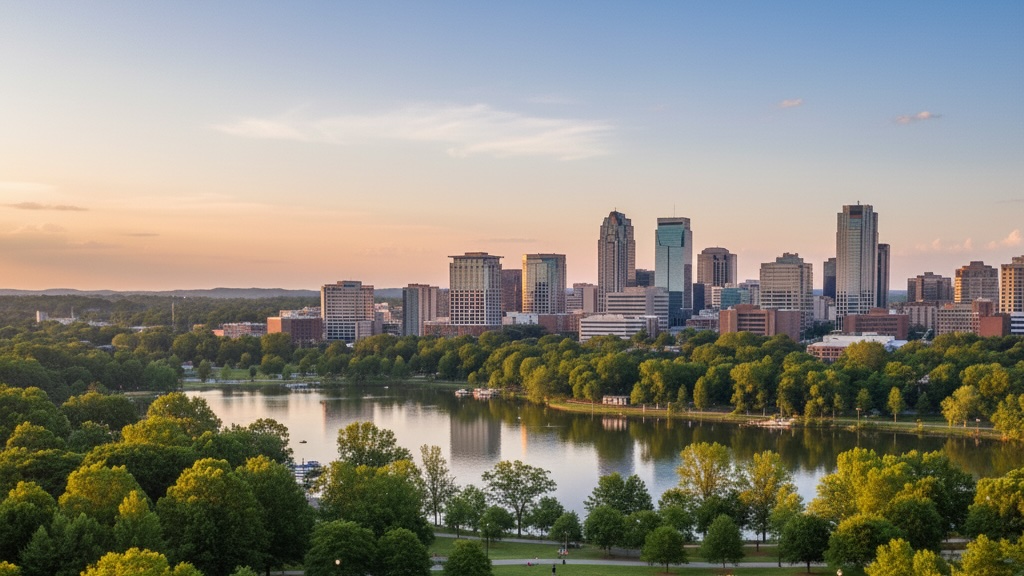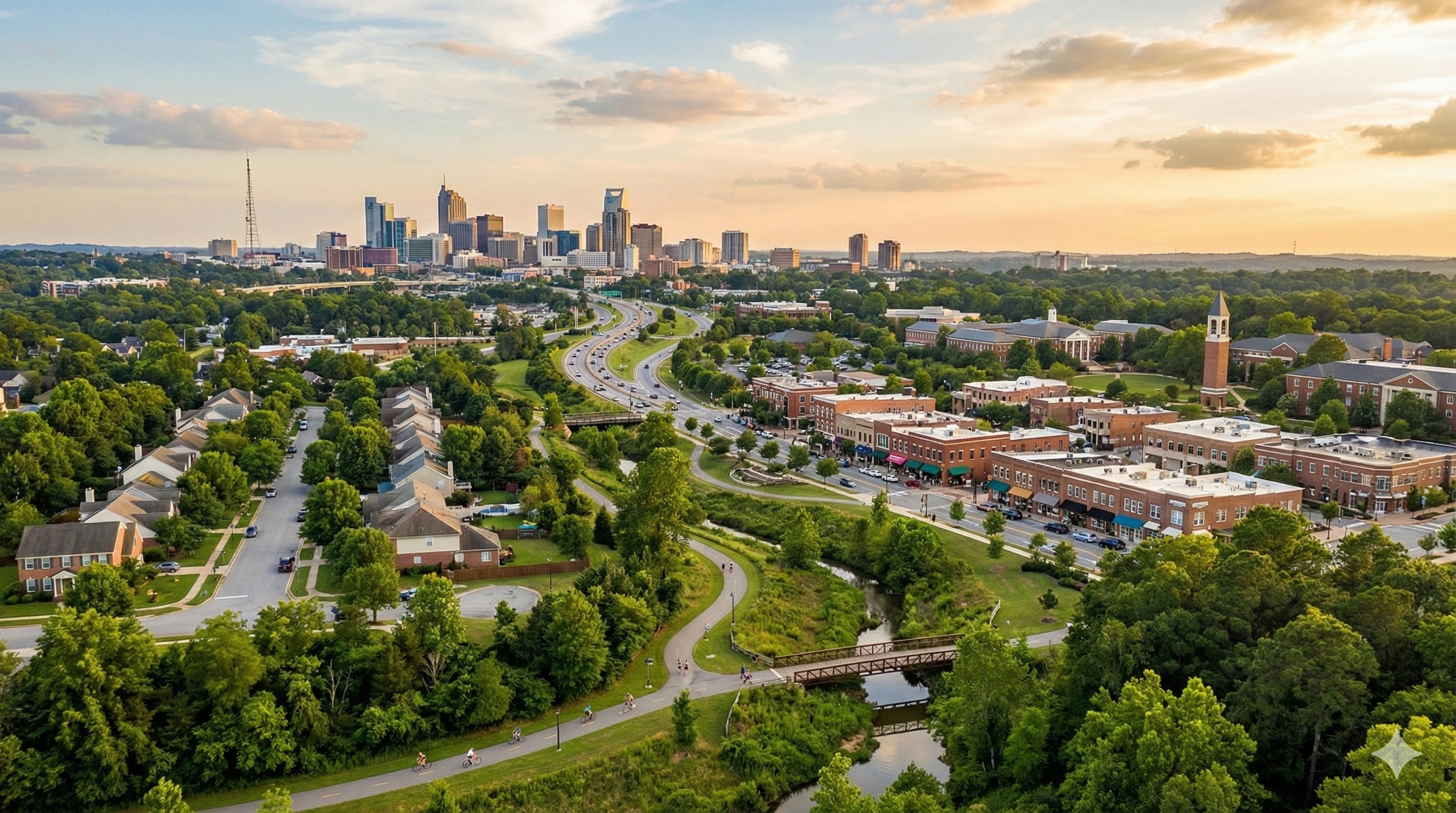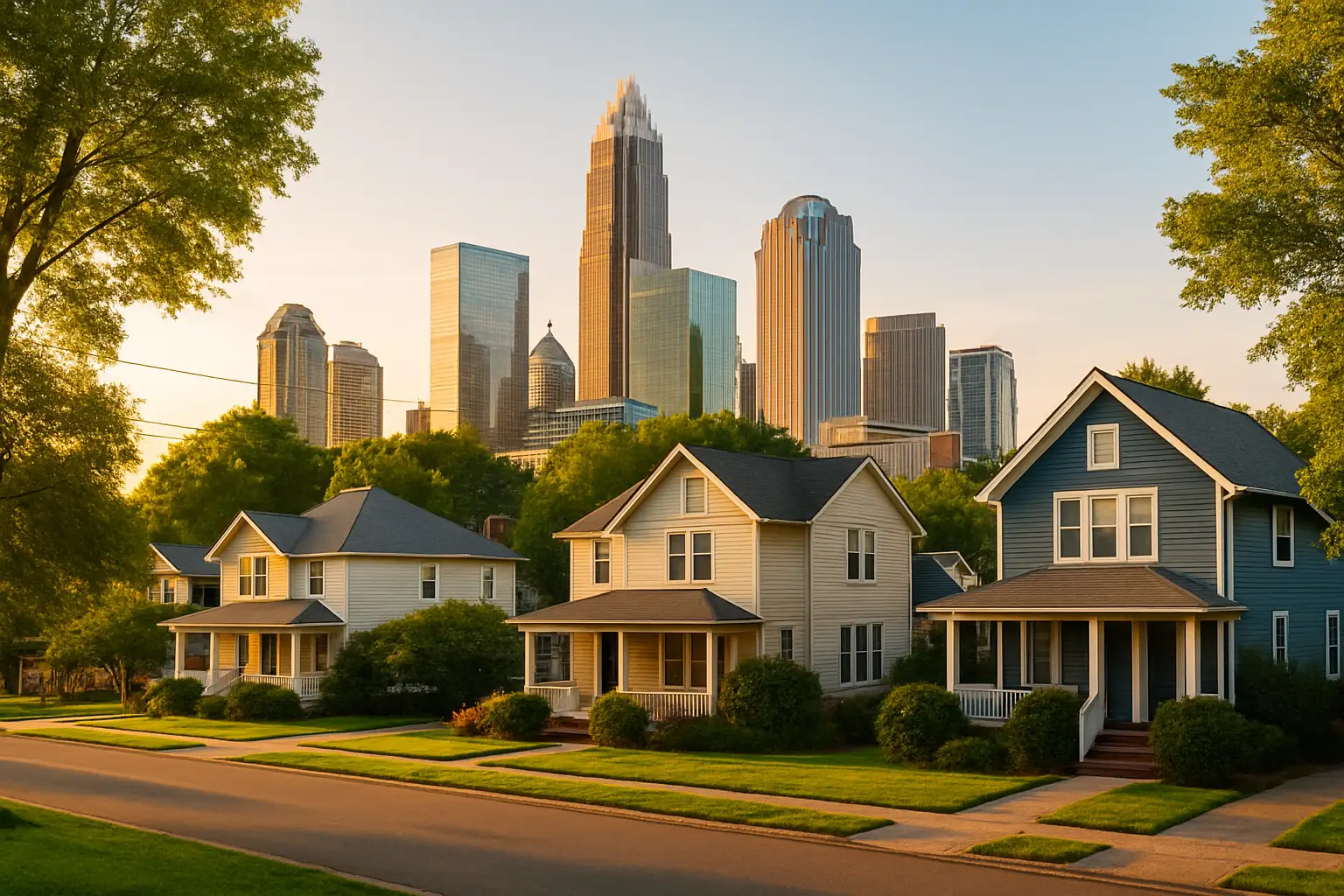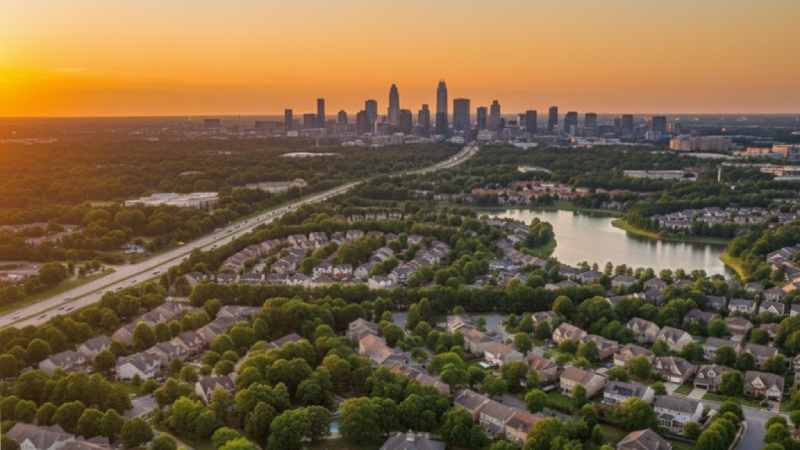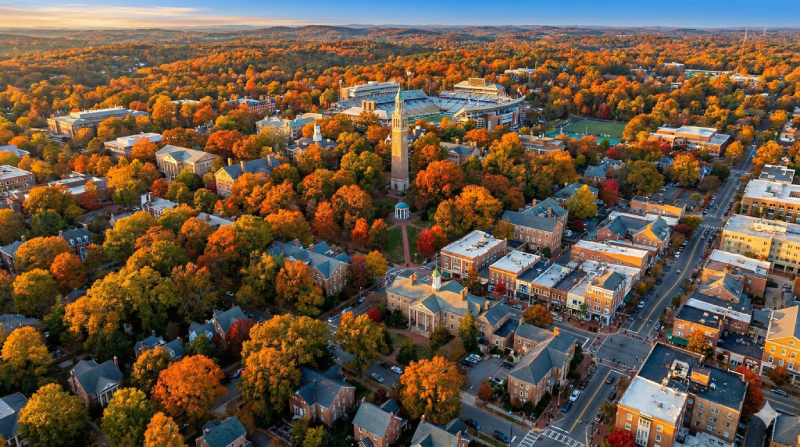
Living in Chapel Hill, NC, offers top-rated schools, world-class healthcare, and Research Triangle opportunities, though housing costs run 15-20% above national averages. This college town of 60,000 attracts professionals, families, and retirees who want progressive culture and small-town charm within the Raleigh-Durham metro. You'll find neighborhood comparisons, salary requirements, moving strategies, and local insights to help you decide if Chapel Hill matches your lifestyle and budget.
Cost of Living in Chapel Hill
Chapel Hill's cost of living sits roughly 15-20% above the national average, driven almost entirely by housing expenses that reflect the town's limited inventory, strong schools, and proximity to UNC and Research Triangle Park. While property costs create a significant barrier to entry, with median home values approaching $620,000 and competitive rental markets, most other daily expenses align more closely with typical American cities, making the premium largely a function of real estate rather than across-the-board inflation. Here's how specific housing and living costs break down:
- Housing costs dominate the budget: The median home value for owner-occupied properties sits at $576,500, though current market conditions push closer to $620,000, while renters pay $1,700-$1,800 monthly for two-bedroom apartments and $2,400+ for three-bedroom units.
- Property taxes rank among the state's highest: Typical homeowners pay approximately $8,000 annually in property taxes, though Orange County delivers excellent public services, top-tier schools, and well-maintained infrastructure in return for these above-average rates.
- Utilities and groceries remain moderate: Duke Energy provides competitively priced electricity, though OWASA water and sewer costs have increased steadily in recent years, while groceries run about 3% above national averages and gas prices typically fall $0.10-0.20 below California or Northeast levels.
- Sales tax affects daily purchases: Orange County's 7.5% sales tax applies to most retail purchases, slightly higher than some neighboring counties but standard for the Research Triangle region.
Housing & Real Estate Market
Chapel Hill's housing market remains highly competitive. Homes typically go pending within 31 days. Multiple offers are standard practice, especially in desirable school districts and established neighborhoods near campus. Limited housing supply combined with steady demand from university employees and Research Triangle professionals keeps prices elevated year-round. Spring and fall markets see the most activity. Winter buyers sometimes find better negotiation opportunities.
The rental market is equally tight, particularly for properties near UNC or in top-rated school zones. Academic calendar timing drives rental availability, with most leases starting in August or January. Property management companies control much of the rental inventory, though individual landlords offer some alternatives. Graduate students and young professionals compete for limited affordable options, so start your search early. Working with local real estate experts who understand Chapel Hill's unique market can save time and prevent costly mistakes during your housing search.
Best Neighborhoods in Chapel Hill
Chapel Hill's housing market divides into different neighborhood tiers. These reflect trade-offs between location, amenities, and affordability. Families who want top-rated schools and community amenities move toward master-planned developments with premium price tags. Young professionals and creatives cluster in walkable urban cores or eclectic adjacent towns with lower entry costs. The choice between established neighborhoods near campus, newer mixed-use developments for Research Triangle commuters, and budget-friendly outlying areas shapes your daily lifestyle, commute patterns, and long-term housing equity.
Downtown Chapel Hill and Franklin Street
These central areas provide immediate access to restaurants, shops, and the campus. They attract young professionals, graduate students, and empty nesters willing to pay premium prices for car-optional convenience and cultural amenities.
Southern Village and Meadowmont
Southern Village and Meadowmont feature pools, trails, shopping centers, and active neighborhood associations. They appeal to families who want suburban convenience with community engagement. Housing costs reflect these extensive facilities.
Carrboro and Historic Northside
Carrboro's eclectic downtown attracts artists and progressive professionals with lower housing costs than Chapel Hill proper. The historic Northside neighborhood offers a tight-knit community feel and campus proximity despite ongoing gentrification pressures.
East 54, Midtown, Glen Lennox, and Hillsborough
Mixed-use communities like East 54, Midtown, and Glen Lennox serve Research Triangle Park commuters with modern apartments and townhomes. Adjacent Hillsborough increasingly attracts budget-conscious families who want small-town charm with maintained Chapel Hill access.
Job Market & Economy
Chapel Hill's employment landscape reflects the symbiotic relationship between UNC-Chapel Hill and the broader Research Triangle economy, creating a two-tier job market where university-affiliated positions offer stability and prestige while private sector roles compete for talent with higher compensation but less institutional security. This dynamic produces median household incomes exceeding $95,000, well above state averages, yet masks significant wage disparities between credentialed professionals in research and healthcare versus service workers supporting the town's retail and hospitality infrastructure. Here's how Chapel Hill's major employment sectors break down:
- UNC-Chapel Hill and UNC Health dominate local employment: The university and its medical system employ over 20,000 residents across academic, administrative, and clinical roles. These jobs resist recession and offer competitive benefits and pension plans.
- Research Triangle Park expands professional opportunities: Located 20-30 minutes away, RTP houses major tech, pharmaceutical, and biotech employers. These companies offer six-figure salaries that let professionals live in Chapel Hill while accessing specialized career paths unavailable locally.
- Service industry wages lag professional compensation: Retail, hospitality, and restaurant positions serving the university community pay significantly less than professional roles. This contributes to affordability challenges for working-class residents despite the town's overall prosperity.
- Business support helps entrepreneurs: StartUp Chapel Hill, co-working spaces, and life sciences recruitment initiatives help diversify the economy beyond university dependence. Academic institutions remain the primary economic engine.
Chapel Hill Schools & Education
Chapel Hill-Carrboro City Schools consistently rank among North Carolina's top-performing districts. The district delivers 90%+ graduation rates and strong college placement that justify the area's premium housing costs for education-focused families. The district's strength extends across all grade levels. Elementary schools have low student-teacher ratios. High schools offer extensive Advanced Placement programs and competitive athletics that regularly place students in selective universities. Beyond traditional public schools, the area provides different educational alternatives, including charter options and private institutions. UNC's academic presence enriches all of these through university partnerships and student teaching programs.
- High schools earn top state rankings: East Chapel Hill High and Chapel Hill High both place among North Carolina's best secondary schools. They offer extensive Advanced Placement courses, competitive athletics programs, and college counseling that prepare students for selective university admissions.
- Middle and elementary schools maintain strong performance: Phillips and Smith middle schools provide gifted programs and STEM enrichment. Elementary schools throughout the district benefit from active parent involvement and low student-teacher ratios, though some face capacity challenges from population growth.
- Alternative education options expand family choices: Charter schools like Woods Charter and Phoenix Academy offer lottery-based enrollment with alternative teaching approaches. Durham Academy's Chapel Hill campus provides private pre-K through grade 4 education with progressive curriculum.
- Special education and enrichment services exceed typical offerings: The district provides extensive resources for students with learning differences. UNC partnerships deliver enrichment programs and student teachers that enhance classroom instruction beyond what most North Carolina districts can offer.
Lifestyle, Culture, and Things to Do in Chapel Hill, NC
Chapel Hill's lifestyle blends college town energy with Southern sophistication. The cultural calendar revolves around UNC athletics. Basketball games at the Dean Dome create town-wide excitement. Franklin Street serves as the social hub, hosting everything from Halloween celebrations drawing 80,000 people to quiet coffee shop study sessions. The town supports numerous arts venues, including the Ackland Art Museum, PlayMakers Repertory Company, and Memorial Hall, which present touring performances.
Outdoor enthusiasts enjoy extensive greenway systems connecting neighborhoods to parks and shopping areas. The North Carolina Botanical Garden offers peaceful walking trails and educational programs. Southern Community Park provides sports fields, playgrounds, and dog parks for active families. Local farmers’ markets operate year-round, supporting the farm-to-table restaurant scene that defines Chapel Hill dining. The music scene ranges from intimate venues like Cat's Cradle to outdoor summer concerts. Annual events like the Chapel Hill-Carrboro Film Festival and Festifall arts celebration strengthen community bonds and attract regional visitors.
Safety & Community
Chapel Hill maintains low crime rates compared to national averages. Violent crime is particularly rare. Property crime (mainly larceny and theft) occurs most frequently in campus-adjacent areas and parking lots. The Chapel Hill Police Department emphasizes community policing and maintains strong relationships with neighborhoods. Campus safety remains a priority, with UNC Police providing additional security and emergency response services.
The community shows strong civic engagement through neighborhood associations, volunteer organizations, and town government participation. Residents actively debate development, transportation, and affordability issues at town council meetings. Social services support vulnerable populations, though rising costs challenge fixed-income seniors and service workers. The town's progressive values show up in environmental initiatives, inclusivity efforts, and social justice advocacy. Neighborhood listservs and social media groups help with communication and mutual support, creating genuine community connections beyond typical suburban anonymity.
Chapel Hill’s Transportation & Commuting
Chapel Hill's transportation system reflects the tension between maintaining a walkable college town atmosphere and accommodating the car-dependent realities of modern suburban living and Research Triangle employment patterns. The university's commitment to fare-free transit and expanding bike infrastructure supports sustainable mobility within core areas. But most residents (particularly those working at RTP or living in newer developments) ultimately depend on personal vehicles for daily needs. This creates persistent parking challenges and traffic congestion during peak periods.
- Chapel Hill Transit offers extensive fare-free bus service: The system provides free rides throughout town and UNC campus. This significantly reduces parking demand and traffic congestion. GoTriangle's regional connections to Durham and Raleigh lack the frequency needed for convenient daily commuting.
- Personal vehicles remain important for most residents: Despite transit options, most Chapel Hill residents rely on cars (especially those commuting to Research Triangle Park or living in outlying neighborhoods). Downtown and campus areas face ongoing parking challenges with strict permit systems and time limits.
- Walkability and cycling options vary by location: Downtown and campus neighborhoods offer highly pedestrian-friendly environments. Newer suburban developments require cars for most errands. The town continues expanding bike lanes and greenway connections, but hills and narrow roads challenge cyclists in many areas.
- Location provides excellent regional access: RDU International Airport sits just 18 miles away via I-40 for convenient air travel. Traffic increases notably during UNC events and peak commute times, particularly along Highway 54 and MLK Boulevard corridors.
Healthcare Access in Chapel Hill, NC
Healthcare access ranks among Chapel Hill's strongest assets. UNC Medical Center provides world-class specialty care and medical research. The hospital system includes cancer, children's, and neurosciences hospitals offering cutting-edge treatments. Primary care practices throughout town accept most insurance plans, though new patient wait times can extend several months. Urgent care centers provide walk-in services for non-emergency needs.
Mental health services benefit from UNC's psychiatry and psychology programs. They offer therapy and counseling options often unavailable in smaller communities. Alternative medicine practitioners (including acupuncture and integrative medicine) serve health-conscious residents. The senior population accesses specialized geriatric care through UNC's aging center. Dental and vision care providers concentrate near the university and in suburban shopping centers. They maintain competitive pricing despite the affluent market.
Weather & Environment
Chapel Hill enjoys four distinct seasons with mild winters averaging 51°F highs and 29°F lows in January. Snow rarely accumulates beyond a few inches annually, though ice storms occasionally disrupt travel and power. Spring and fall bring comfortable temperatures and stunning foliage. These seasons are ideal for outdoor activities and events. Summers turn hot and humid, with July temperatures reaching 89°F and afternoon thunderstorms providing dramatic cooling.
The town puts environmental sustainability first through renewable energy initiatives, comprehensive recycling programs, and green building requirements. Tree canopy preservation maintains neighborhood character while providing natural cooling and stormwater management. Air quality generally rates good to moderate, though summer ozone levels occasionally trigger warnings for sensitive individuals. The surrounding Piedmont offers rolling hills, forests, and streams that support different wildlife within suburban settings.
Moving Tips for a Smooth Chapel Hill Relocation
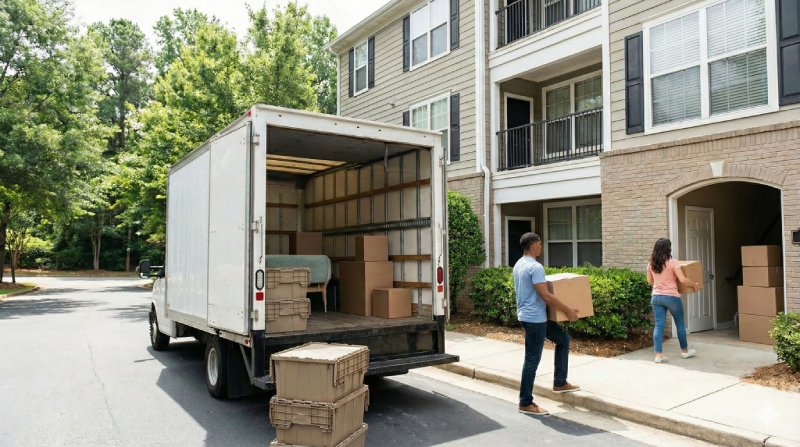
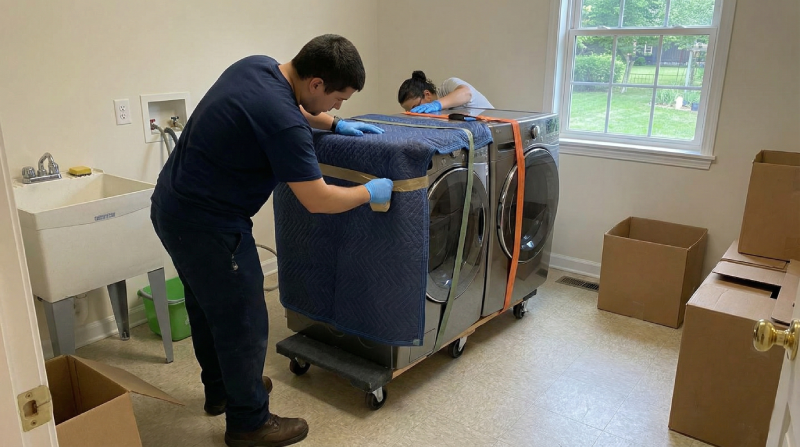
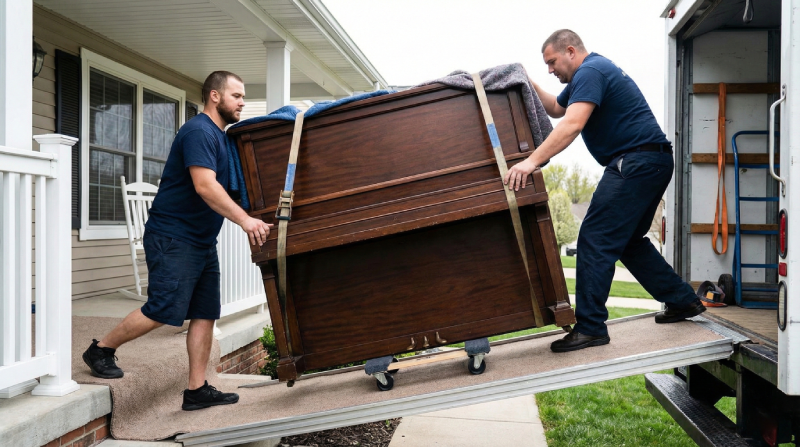
Planning your Chapel Hill move requires understanding the unique challenges of this college town. Narrow streets around campus and historic neighborhoods challenge large moving trucks. Apartment complexes near UNC enforce strict move-in windows during peak periods. Book professional movers at least 4-6 weeks ahead for August moves when student turnover creates extreme demand. For budget-conscious relocations, consider hiring labor-only services like Moving Muscle to handle heavy lifting while you rent and drive the truck yourself. This saves 40-50% compared to full-service movers.
Smart timing makes a significant difference in Chapel Hill moving costs and stress levels. April through June offers mild weather and less competition than late summer's student rush. Avoid UNC graduation weekend and basketball tournament dates when hotel prices spike and traffic increases dramatically. Reserve elevator time in high-rise buildings immediately after signing leases. Slots fill quickly during peak periods. Professional movers familiar with Chapel Hill understand campus-area parking restrictions. This protects you from tickets and towing during loading. Consider storage units for staging belongings if your closing and move-out dates don't line up perfectly. The competitive market rarely accommodates timing flexibility. Understanding how long it takes to move can help you plan your timeline more effectively.
Moving to Chapel Hill Starts with Smart Planning
Chapel Hill's premium housing costs, 15-20% above national averages, buy access to top-3 state schools, UNC Health's world-class medical care, and Research Triangle career opportunities that justify the investment for many families. Success here depends on securing housing before peak August competition and budgeting a minimum household income of $75,000-$95,000 household income minimum. Ready to make your move? Get a free quote from Moving Muscle to save 40-50% on your Chapel Hill relocation.
Frequently Asked Questions
Is Chapel Hill more expensive than Durham?
Yes, Chapel Hill costs approximately 15-20% more for housing than Durham, though other living expenses remain similar between the two cities.
What salary do I need to live comfortably in Chapel Hill?
A household income of $75,000-$95,000 supports comfortable living, though families with children may need $100,000+ to afford desired neighborhoods and save adequately.
When is the worst time to move to Chapel Hill?
Late July through August creates maximum competition and prices due to student move-ins and academic year preparation.
Can I live in Chapel Hill without a car?
Downtown and campus-adjacent neighborhoods offer car-free living with Chapel Hill Transit, but most areas require vehicles for practical daily life.
How far is Chapel Hill from the beach?
Chapel Hill sits approximately 2.5-3 hours from North Carolina beaches like Wilmington or the Outer Banks. If you're interested in coastal living, check out our guide on living in Wilmington, NC.
Are Chapel Hill schools really worth the high housing costs?
Chapel Hill-Carrboro schools consistently rank in the top 3 statewide with 90%+ graduation rates and strong college placement, justifying premiums for many families.
What areas offer the best value in Chapel Hill?
Northern Chapel Hill, parts of Carrboro, and adjacent Hillsborough provide relatively affordable options while maintaining school access and reasonable commutes. If you want broader perspectives on the state, our overview of living in North Carolina might help.










.webp)